
DIY Fermented Vegetables: A Guide to Gut-Healthy Crunch
Learn how to ferment cucumbers, cabbage (sauerkraut), and carrots at home. A simple, step-by-step guide to creating gut-healthy probiotics in your own kitchen.
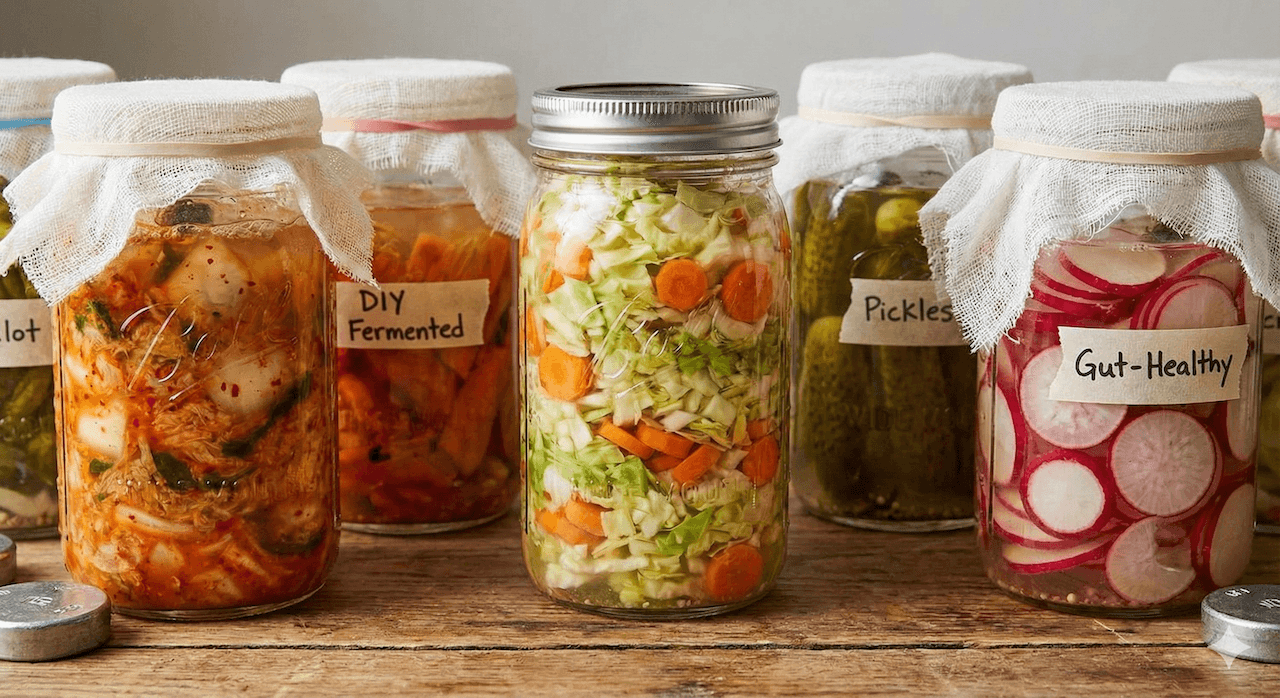
Fermenting your own vegetables might sound like a science experiment, but it’s actually one of the easiest (and healthiest!) things you can do in your kitchen. Whether you are craving crunchy pickles, tangy sauerkraut, or savory carrot ribbons, the process is surprisingly simple.
Here is my step-by-step guide to fermenting cucumbers, cabbage, and carrots at home.
🛠️ Step 1: Prep Your Jars
Hygiene is the most important part of fermentation!
- Take your glass jars (even if they look clean from the cupboard) and sterilize them.
- Pour boiling water all the way to the rim.
- Wait 3 minutes, then carefully pour the water out.
🥗 Step 2: Prepare the Vegetables
Note: Organic vegetables are preferred for the best fermentation results.
Option A: The Cucumbers 🥒
- Wash them well.
- Pack them tightly into the jar.
- Add flavor: Toss in whole black peppercorns and bay leaves.
- Optional: Add a few cloves of garlic and fresh dill for that classic deli style.
Option B: The Cabbage (Sauerkraut) 🥬
- Slice the cabbage into thin strips using a knife or a mandoline.
- Weigh the cabbage. You need to calculate 3% salt based on the cabbage's weight.
- The Magic Ratio: For every 1 kg of cabbage, use 33g of salt.
- Mix the salt and cabbage in a large bowl.
- Let it sit for 20–30 minutes. The salt will draw out the water.
- Pack the cabbage firmly into the jar, pouring in all the liquid (brine) that was released.
- Note: If the liquid doesn't cover the cabbage near the top, add a tiny splash of cold water.
Option C: The Carrots 🥕
- Using a vegetable peeler, peel the carrots into long, thin ribbons.
- Pack them tightly into the jar.
🧂 Step 3: The Brine (For Cucumbers & Carrots Only)
Skip this step if you are making the Cabbage, as it makes its own brine!
- Take 33g of high-quality salt (Atlantic Grey or Celtic salt are best).
- Dissolve it in a small amount of boiling water.
- Add cold water until you reach exactly 1 liter total liquid.
- Pro Tip: Place a pitcher on a scale, tare it, and weigh out 1000g of water total.
- Pour the brine over the cucumbers or carrots until covered.
🍋 Step 4: Weigh It Down
This applies to all vegetables. You need to keep the veggies submerged under the liquid to prevent mold.
- Place a fermentation weight or 2–3 slices of lemon on top of the vegetables.
- Close the lid tightly.
- Place the jars in a shaded place at room temperature.
⏱️ Step 5: The Daily "Burp"
Fermentation creates gas, so you need to release the pressure.
- Every day: Open the lid slightly to let gas escape ("burp" the jar), then close it back up.
- Don't Panic: If you see white foam appearing, this is normal! Just skim it off with a clean spoon and carry on.
📅 How Long to Ferment?
Taste continuously, but here are the target timelines:
- 🥒 Cucumbers: 5–7 Days
- 🥕 Carrots: 4–5 Days
- 🥬 Cabbage: 7–10 Days
The Finish Line: Once they reach your desired tanginess, move the jars to the fridge to stop the fermentation process. Enjoy!